
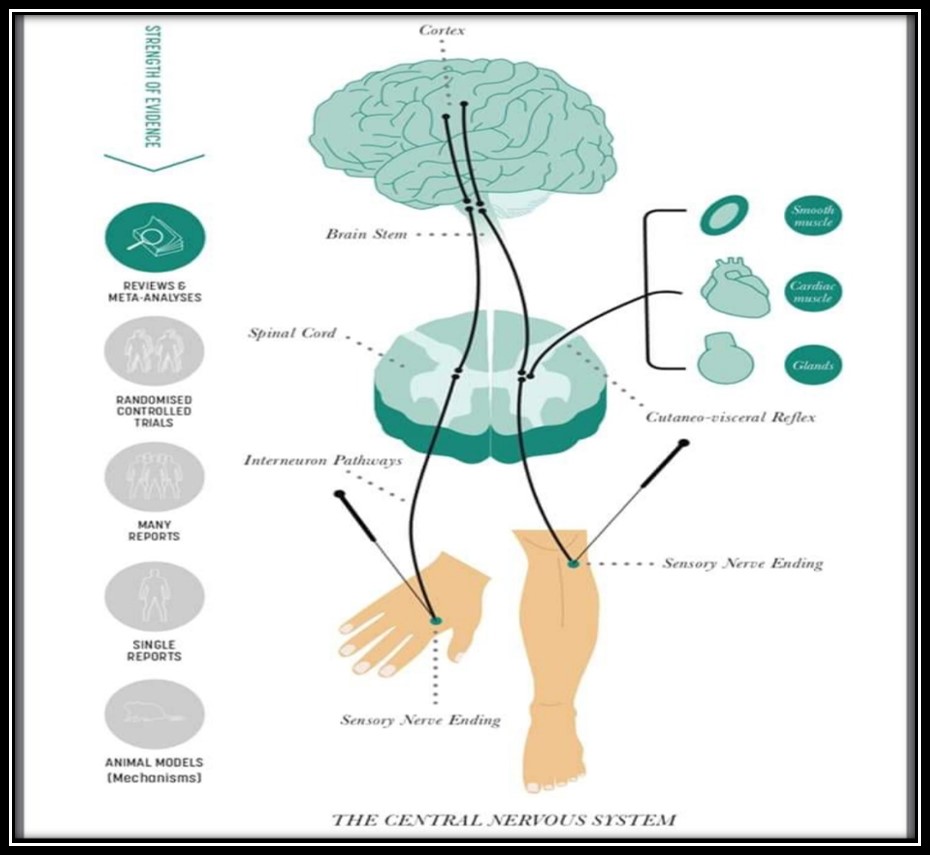
Quick answer: Acupuncture may work by triggering the release of ATP (adenosine triphosphate), the energy molecule found in every cell, and adenosine, a compound that has anti-inflammatory effects and helps regulate pain. Because ATP and adenosine are used by all body systems, this may help explain why acupuncture is used for so many different conditions. Treatments work best as a series, and the effects tend to build over time.
Acupuncture works in a series of treatments, much like physical therapy, radiation therapy, or exercise. The effects are cumulative, and for many people they may be long-lasting.
Research suggests one way acupuncture does this is by prompting the release of ATP, the energy molecule made in each of our cells. ATP is present in, and necessary for, all of the body's processes and functions.
ATP (adenosine triphosphate) is often called the cell's energy currency. When ATP breaks down, one of the pieces released is adenosine, and the body can rebuild ATP again depending on what it needs at the time.
Adenosine is the part that matters most for pain. It is released during acupuncture and has anti-inflammatory effects. It also plays a role in how the body regulates acute, chronic, and nerve-related pain, which may help explain why acupuncture is best known for pain relief. One well-known laboratory study in mice, published in Nature Neuroscience in 2010, found that adenosine was involved in the pain-relieving effect of acupuncture.
ATP and adenosine are present in all cells, in all tissues, and in all body systems. That is why an acupuncture treatment is not limited to one problem. It may help support the body wherever it needs it, whether that is pain, digestion, hormones, stress, or sleep.
In a sense, an acupuncture treatment 'reminds' the body how it functions when it is healthy: moving easily and without pain, with the endocrine, reproductive, immune, cardiovascular, digestive, and metabolic systems all working smoothly together, emotions calm and steady, and quality sleep. This may help support homeostasis, or balance, which is simply the body remembering how everything is supposed to work together.
From the thousands-of-years-old Chinese medicine perspective, acupuncture works by promoting the movement of Qi (pronounced 'chee'), the life force or animating energy found in nature and in all living beings. When Qi flows freely, the body and its cells, tissues, and organs are nourished and in harmony. When Qi is blocked, pain and illness may result.
Many practitioners, myself included, see a meaningful parallel between the two views: ATP, the energy molecule in each of our cells, and Qi, the energy described in acupuncture and Chinese medicine. Both ideas point to the same truth. The body needs its energy to be available and flowing in order to function well, and acupuncture may support that by encouraging the release of ATP for the body to use as needed.
Purinergic signaling is the name for how cells communicate using ATP, adenosine, and related molecules, which are called purines. The field traces back to the work of neuroscientist Geoffrey Burnstock of University College London, who began describing it in the early 1970s. Acupuncture research on adenosine is one of the places where this science meets a very old medicine.
Most people notice the best results from a series of treatments rather than a single visit, because the effects build on one another. The number of visits depends on what you are working on and how long you have had it. Your acupuncture physician can map out a plan that fits you.
How does acupuncture work in the body?
Acupuncture may work by prompting the release of ATP and adenosine, which support energy, calm inflammation, and help regulate pain. Chinese medicine describes the same process as encouraging the smooth flow of Qi.
Is ATP the same as Qi?
They are not scientifically identical, but many practitioners see ATP, the energy molecule in our cells, as a modern parallel to Qi, the energy described in Chinese medicine.
Why does acupuncture treat so many different conditions?
ATP and adenosine are used by every cell and body system, so supporting them may help the body in many different ways.
Does acupuncture work after one treatment?
Some people feel a difference right away, but acupuncture usually works best as a series, with effects that build over time, very often with lasting results.
What is adenosine's role in acupuncture?
Adenosine is released during acupuncture and has anti-inflammatory effects. It also plays a role in the body's regulation of acute, chronic, and nerve-related pain.
Disclaimer: Individual results vary. Acupuncture supports your overall wellness in conjunction with your additional healthcare providers. This content is for general education and is not a medical guarantee.
Thank you for reading! Text (904) 687-4093 for your Welcome Text or to request an appointment.
Sarah Newman, Acupuncture Physician, MAOM, AIT/Acupuncture Injection Therapy cert.
Vitality Acupuncture LLC | 2810 E Cervantes St, Pensacola, FL 32503 | VitalityAcupuncture.net